
Explainer
The Illustrated Parts Catalog: IPC, IPB, RPSTL, and S1000D
How It Works
A Picture, a Number, a List
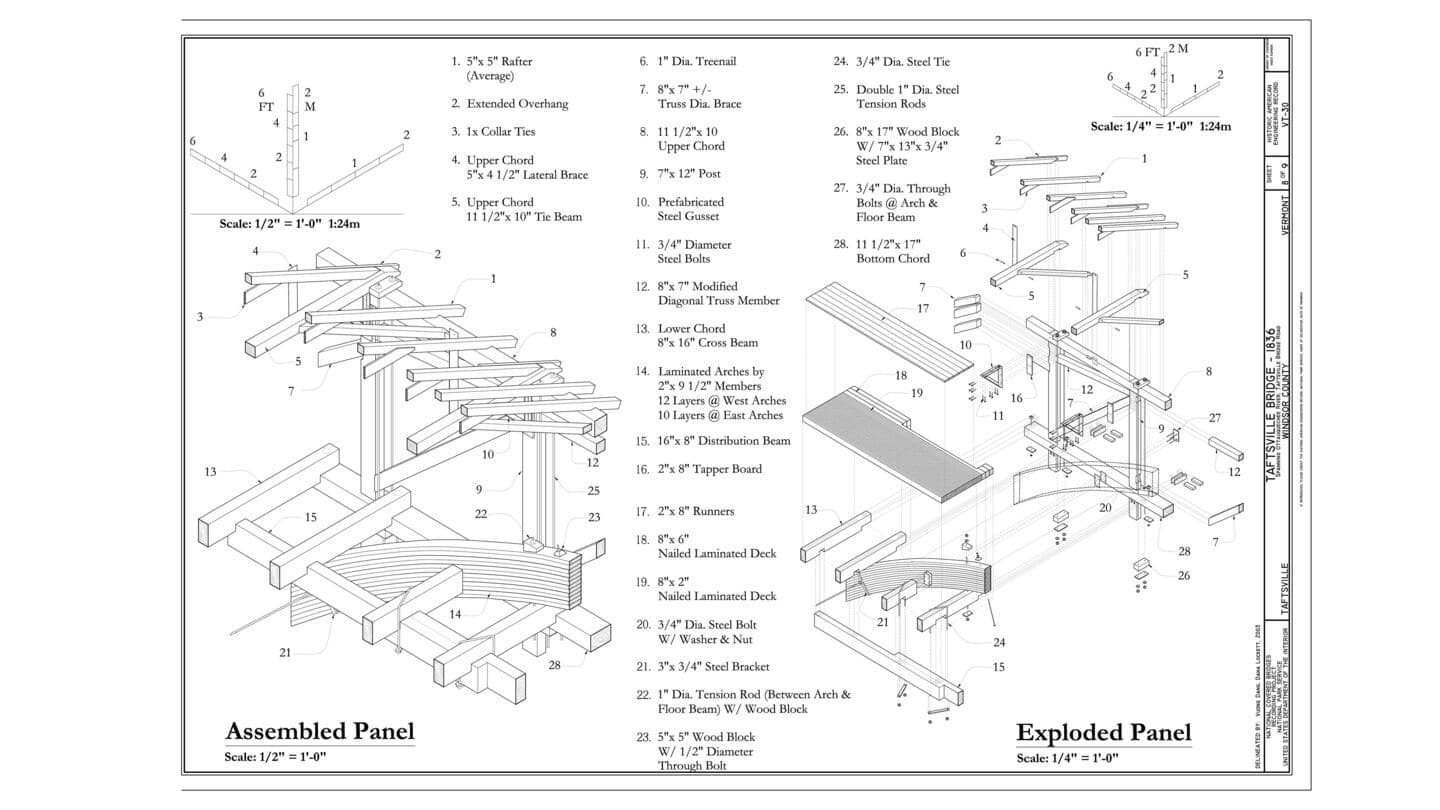
A parts catalog breaks a product down in disassembly order: the whole, its assemblies, their subassemblies, down to the smallest replaceable part. Each level gets a figure, usually an exploded view, with item numbers pointing at every part, and each figure gets a list keyed to those numbers.
The list carries the identity: the part number, a description indented to show which assembly the part belongs to, the quantity used in that next higher assembly, and the configurations or serial numbers it applies to. Many aviation catalogs put the exploded view on one page and the list facing it, so a technician can go from picture to part number without turning a page. Military lists add supply data such as stock numbers and SMR codes. It sits alongside the rest of the aircraft manual family, and it is the manual most used as a lookup tool rather than read.
By Domain
One Idea, Six Names
- Civil aviation: the IPC
- The illustrated parts catalog, organized by the ATA chapter numbering of ATA iSpec 2200 like the rest of the aircraft's maintenance library. The FAA's technician handbook describes it as component breakdowns in disassembly sequence, with exploded or cutaway views whose numbers correspond to a list of part numbers. ATA iSpec 2200.
- U.S. Army: the RPSTL
- The repair parts and special tools list, delivered under MIL-STD-40051E as work packages: an introduction, then parts list work packages each pairing at least one figure with its list, plus special tools, kits, and bulk items. It can stand alone, sit inside a depot maintenance work requirement, or ship inside the equipment manual, which is what the P in a -20&P manual means. MIL-STD-40051.
- Naval aviation: the IPB
- The illustrated parts breakdown, defined in Part 8 of MIL-STD-3001: front matter, alphabetical and numerical indexes, and the Group Assembly Parts List with its figures, where indentation in the description shows each part's next higher assembly. MIL-STD-3001.
- U.S. Air Force: the -4 technical order
- For aircraft, the illustrated parts breakdown is the -4 manual in the technical order numbering system, per TO 00-5-18. The type numbers are standard within a category of equipment, not across categories. Air Force technical orders.
- S1000D: illustrated parts data
- Parts content lives in data modules with information code 941, Illustrated parts data, written to the specification's own parts schema: catalog and item sequence numbers, quantity per next higher assembly, SMR codes, and applicability. The S-Series site describes S2000M as the database the catalogs are produced from, with S1000D covering how they are presented. S1000D information codes.
- Industrial equipment: the parts book
- Manufacturers of heavy and industrial equipment publish parts books and, increasingly, dealer parts portals. We know of no standard governing their format; IEC/IEEE 82079-1, the international standard for instructions for use, includes spare parts among the information supplied with a product, and the rest is each manufacturer's practice. Industrial technical documentation.
Military Lists
Reading an SMR Code
Source, maintenance, and recoverability codes appear on every line of a U.S. military parts list. They are uniform across the services under a joint regulation (issued as Army Regulation 700-82, SECNAVINST 4410.23A, and AFMAN 21-106; current edition 2020), and they tell a maintainer who may touch a part and what to do with it afterward:
- Positions 1 and 2: source
- How the item is acquired: procured and stocked, manufactured, assembled, and so on.
- Position 3: maintenance (use)
- The lowest maintenance level authorized to remove, replace, and use the item.
- Position 4: maintenance (repair)
- The level authorized to perform a complete repair. Optional within a single service, shown as a dash when unused.
- Position 5: recoverability
- What happens to the item once it becomes unserviceable.
- Position 6: service option
- A code unique to each service. Army RPSTL introductions explain only the first five positions, which is why five is the number most people remember.
Where It Fails
A Catalog Is Only as Good as Its Parts Data
A parts catalog is rarely authored from scratch. MIL-STD-40051E makes logistics product data, developed by provisioners and logistics specialists, the baseline its manuals are prepared from, and in the S-Series the catalog is produced from the S2000M provisioning database. Both trace back to logistics support analysis. The publication is the visible end of a data chain.
That is where catalogs go wrong. Parts data is maintained apart from the narrative manuals, on its own schedule, often by a different team, and when the catalog drifts from provisioning, the wrong part ships before anyone notices. It is also a recurring conversion trap: parts data tends to be remembered at integration rather than at planning, and legacy catalogs frequently need converting before they can join a structured library.
Delivery matters more here than for any other manual, because a catalog is used for lookup. A PDF makes a technician scroll for a part number and trust that the copy is current. The Content Portal delivers technical content searchable, version-controlled, and scoped to exactly who should see it, which for a parts catalog means the dealer or operator sees the current revision of the content that applies to them.
FAQ
Questions We Hear
What is an illustrated parts catalog?
A manual that identifies every replaceable part of a product: exploded illustrations whose item numbers key to a parts list giving each part number, its description, how many are used in the next higher assembly, and which configurations or serial numbers it applies to. Technicians use it to identify and order the right part.
What is the difference between an IPC and an IPB?
Mostly the name and the governing standard. IPC is the civil aviation term, under ATA iSpec 2200. IPB, illustrated parts breakdown, is the term in U.S. naval aviation, where MIL-STD-3001 Part 8 defines it, and in the Air Force, where it is the -4 technical order. Both pair exploded illustrations with indentured parts lists.
What is an RPSTL?
The repair parts and special tools list in a U.S. Army technical manual. Under MIL-STD-40051E it is delivered as work packages, each pairing figures with parts lists that give the item number, SMR code, national stock number, CAGE code, part number, description with usable-on code, and quantity.
What is an SMR code?
A source, maintenance, and recoverability code: a uniform code, set by a joint regulation across the U.S. services, that says how a part is acquired, who may replace and repair it, and what happens to it when it fails. The uniform format has six positions; Army RPSTLs explain the first five.
How does S1000D handle parts catalogs?
As illustrated parts data modules, information code 941, written to the specification's parts schema. The parts data itself typically comes from an S2000M provisioning database or from engineering data, and the same modules can be published as a page-based catalog or delivered interactively.
Is there a standard for industrial parts books?
We know of none that governs the format. IEC/IEEE 82079-1 covers spare parts as part of the information supplied with a product, and manufacturers otherwise follow their own conventions, which is why parts books from different makers look so different.

Get In Touch
Converting or Delivering a Parts Catalog?
We convert legacy manuals, parts catalogs included, into S1000D and the MIL-STD formats, and deliver them through the Content Portal.