
Explainer
How Army Technical Manual Numbers Work
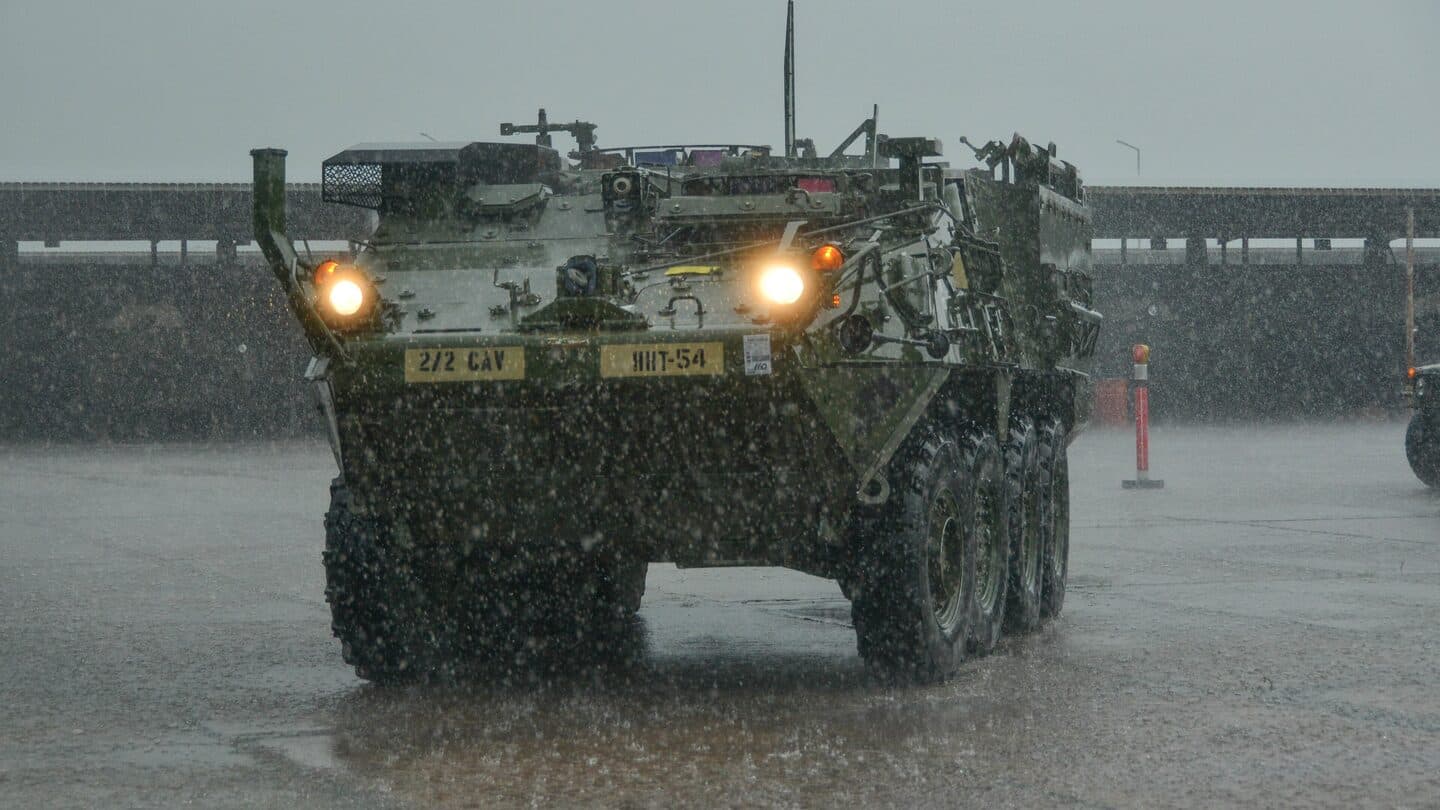
The Anatomy
Five Fields, Read Left to Right
The Army numbers its technical manuals under its publishing pamphlet, DA PAM 25-40 (the current edition is dated 1 February 2024). An equipment TM number is a fixed sequence of fields. Using the pamphlet's own example, TM 5-5420-210-20:
- Series 5
- The general type of equipment or subject, from the pamphlet's series table: 1 is aviation, 5 engineers, 9 ordnance (missile and munitions), 10 quartermaster, 11 signal, 55 transportation. Numbers below 10 never take a leading zero.
- FSC 5420
- The four-digit federal supply classification of the equipment, taken from FED LOG. The first two digits are the FSC group, the last two the class. A manual covering models in different classes of one group uses the group followed by two zeros, such as 1500.
- Sequence 210
- Up to four digits, assigned by the Army Materiel Command Logistics Data Analysis Center (USAMCLDAC) to tell apart equipment in the same series and FSC. Every TM on the same item carries the same sequence number, whatever its maintenance level.
- Maintenance level 20
- Two digits for who the manual is written for. The current table lists three: -10, -12, and -20.
- Suffix and volume P, &P, -1
- Optional. P or &P says where the repair parts list lives, letters such as HR or MTF mark special types of manual, and -1, -2, and so on number the volumes of a thick page-based TM.
The pamphlet's other examples show the optional parts at work. TM 5-5420-210-20P-2 is the separate parts list for the same bridge at maintainer level, volume 2. TM 9-1430-588-10-HR is a hand receipt at operator level. TM 1-1520-228-MTF is an aircraft maintenance test flight manual, and drops the maintenance level altogether, as most special types do.
One consequence of the shared sequence number is worth knowing when you search: every manual for one item, operator through maintainer, differs only in its last field. Find one and you have the stem for the rest.
Maintenance Levels
Who the Manual Is For
The two digits after the sequence number say which level of maintenance the manual supports. The current pamphlet lists three:
- -10
- Operator/crew maintenance: what the people who operate the equipment do.
- -12
- Operator through maintainer maintenance: operator and maintainer coverage combined in one manual.
- -20
- Maintainer maintenance: the field maintainer's procedures.
Sustainment-level work largely sits outside this scheme: the pamphlet groups it as sustainment maintenance procedures, such as depot maintenance work requirements (DMWRs) and national maintenance work requirements. Manuals written under earlier editions of the pamphlet may carry level codes this table no longer lists, so read an older number against the edition in force when it was published.
Parts Lists
P and &P: Where the RPSTL Lives
Most equipment needs a repair parts and special tools list (RPSTL), the Army's parts catalog. The suffix tells you whether it has its own book:
- P (as in -20P) marks a RPSTL published as a separate TM. The pamphlet allows that only for hardcopy and PDF.
- &P (as in -20&P) marks a TM that carries the maintenance instructions and the RPSTL together.
Both come before any volume number (-20P-1, -20&P-1). RPSTLs are normally published at the -12P level, and they can be combined with maintenance or operator and maintenance manuals as -12&P. An interactive electronic technical manual never has a separate parts TM: the pamphlet prohibits IETM RPSTL TMs and combines the parts data with the maintenance coverage instead.
Special Types
Letters That Change the Rules
A set of letter suffixes marks special kinds of equipment TM. These omit the maintenance level, except hand receipts and preventive maintenance checklists. A selection from the pamphlet's table (for what PMCS tables and the maintenance allocation chart do inside the manuals themselves, see PMCS and the maintenance allocation chart):
- -HR
- Hand receipt. Always carries -10, as in -10-HR.
- -PMC
- Preventive maintenance checklist (non-aviation). Takes any field level, such as -10-PMC or -20-PMC.
- -CL
- Pilot and crew checklist (aircraft).
- -MTF
- Maintenance test flight (aircraft).
- -BD
- Battle damage repair.
- -T
- Troubleshooting procedures.
- -L
- List of applicable publications.
- -SUM / -SAM
- Software user's manual / software administrator's manual.
S1000D and IETMs
New Formats, Same Number
Manuals built to S1000D under the Army's business rules, MIL-STD-3031, still get a TM number. The pamphlet calls for an alternate publication number under the same scheme, shown on the cover alongside the S1000D publication module code, so the manual can be found and requisitioned like any other. Its glossary also treats the S1000D term interactive electronic technical publication as equivalent to IETM.
The content rules sit elsewhere: page-based manuals and IETMs are prepared to MIL-STD-40051, which the pamphlet also points to for how volumes are split. For what makes an IETM interactive, see our guide to IETM levels and classes, and for the software the Army uses to display them, IADS.
Finding Them
Where Official Army TMs Live
Two official sources cover most searches. The DA Publishing Index on the Army Publishing Directorate site, armypubs.army.mil, lists Army publications and is where the pamphlet itself is published. Electronic and interactive manuals are distributed through the electronic technical manuals site run by USAMCLDAC, the same center that assigns TM sequence numbers. Searching either by the stem of a TM number is usually faster than searching by equipment name.
Expect gates. Many equipment manuals carry a distribution statement that limits who may receive them, and restricted publications are not posted where the public can reach them: they sit behind CAC or account access for authorized users. Copies on public download and surplus sites are not an authorized source, and nothing tells you whether they are the current revision, which is the one maintenance has to follow.
Writing One
If Your Contract Delivers a TM
Contractors do not choose their own TM numbers. On the government side, the equipment publications control officer assigns publication numbers, requests number blocks from USAMCLDAC, and forwards the statements of work for ETMs and IETMs to USAMCLDAC for review. Get the number, and the RPSTL and level decisions behind it, from the program before authoring starts: the suffix decides how the deliverable is structured.
The rest of the Army's deliverable chain is covered in which MIL-STD applies to your technical manual and what IADS means in an Army RFP. The other services number differently: the Air Force publishes technical orders and the Navy's shipboard engineering library is the NSTMs.
FAQ
Questions We Hear
What do the numbers in an Army TM number mean?
Read left to right, an equipment TM number gives a series number for the type of equipment, the item's four-digit federal supply classification, a sequence number that identifies the item, and a two-digit maintenance level, followed by optional suffixes and volume numbers. In TM 5-5420-210-20, 5 is the engineer series, 5420 is the FSC class for fixed and floating bridges, 210 is the sequence number, and 20 means maintainer maintenance. The scheme is set out in DA PAM 25-40.
What does -10 or -20 mean on an Army TM?
It is the maintenance level the manual is written for. Under the current DA PAM 25-40, -10 is operator/crew maintenance, -12 is operator through maintainer maintenance, and -20 is maintainer maintenance. Manuals written under earlier editions of the pamphlet can carry level codes the current table no longer lists.
What is the difference between -20P and -20&P?
Both concern the repair parts and special tools list (RPSTL). P marks a RPSTL published as its own TM, separate from the maintenance instructions, which the pamphlet allows only for hardcopy and PDF. &P marks a TM that contains both the maintenance instructions and the RPSTL. An IETM never has a separate RPSTL TM: its parts data is combined with the maintenance coverage.
Where can I find Army technical manuals online?
The official sources are the DA Publishing Index on the Army Publishing Directorate site (armypubs.army.mil) and the electronic technical manuals site run by USAMCLDAC for ETMs and IETMs. Many equipment manuals are distribution-restricted, so both put them behind CAC or account access, and only authorized users can retrieve them.
Why can't I download some Army technical manuals?
Because they carry a distribution statement that limits who may receive them. A restricted manual is not published on a public website; it is released to authorized users through the official sites. A copy found on a public download site is not an authorized source, and nothing guarantees it is the current revision.
How are S1000D Army manuals numbered?
They still get a TM number. For TMs prepared to MIL-STD-3031 and S1000D, DA PAM 25-40 calls for an alternate publication number assigned under the same scheme and shown on the cover alongside the S1000D publication module code, so the manual can be found and requisitioned like any other TM.

Get In Touch
Delivering an Army TM?
We author and convert Army technical manuals to MIL-STD-40051 and S1000D, with the parts data and maintenance coverage structured the way the TM number says they should be.