
Explainer
The Weight and Balance Manual
The Short Answer
The Data That Keeps a Load Inside Its Limits
A weight and balance manual holds the aircraft-specific data used to determine its weight and center of gravity (CG), and to load it so both stay within limits. The FAA's weight and balance control guidance names it alongside the flight manual and the type certificate data sheet as a source of certificated limits and data for the loading schedule.
Two groups use it. Maintenance determines the aircraft's empty weight and CG after weighing and after changes. Operations uses that result, plus the loading data, to work out every flight's load. The FAA's handbook describes the same split: it exists for mechanics, who determine empty weight and empty weight CG, and for flight crews, who need to load and operate the aircraft within limits.
The Rules
What the Regulations Require
For transport category airplanes, 14 CFR 25.1519 makes the weight, CG, and weight distribution limitations determined under 25.23 through 25.27 operating limitations. Section 25.29 says how empty weight and CG are found: by weighing the airplane with fixed ballast, unusable fuel, and full operating fluids, in a condition that is well defined and can be easily repeated.
Section 25.1583(c) puts the limitations in the Airplane Flight Manual. It then allows the supporting information (the items in empty weight, the loading instructions, and the limits for each separate CG range) to sit either in the AFM or in a separate weight and balance control and loading document that the AFM incorporates by reference. That sentence is where a standalone weight and balance manual comes from. The regulation requires the content, not the title. Part 23 airplanes follow a different rule: 14 CFR 23.2620(a)(4) requires loading information in the Airplane Flight Manual.
Weighing is also a maintenance task. Appendix H to Part 25 lists weighing and determining the center of gravity among the general procedural instructions in the Instructions for Continued Airworthiness; see our guide to instructions for continued airworthiness.
Contents
What It Typically Holds
Titles and layouts vary by manufacturer, so this is the common shape, not a specification.
- The reference condition
- What is counted in empty weight, and the fixed datum the center of gravity is measured from, so everyone weighs and calculates the same way.
- Weighing procedure
- How to prepare, level, and weigh the aircraft, and how to turn the scale readings into an empty weight and CG.
- Loading data
- The stations, arms, and moments for seats, cargo holds, and fuel tanks, so any load can be converted into a weight and CG.
- Limits and envelopes
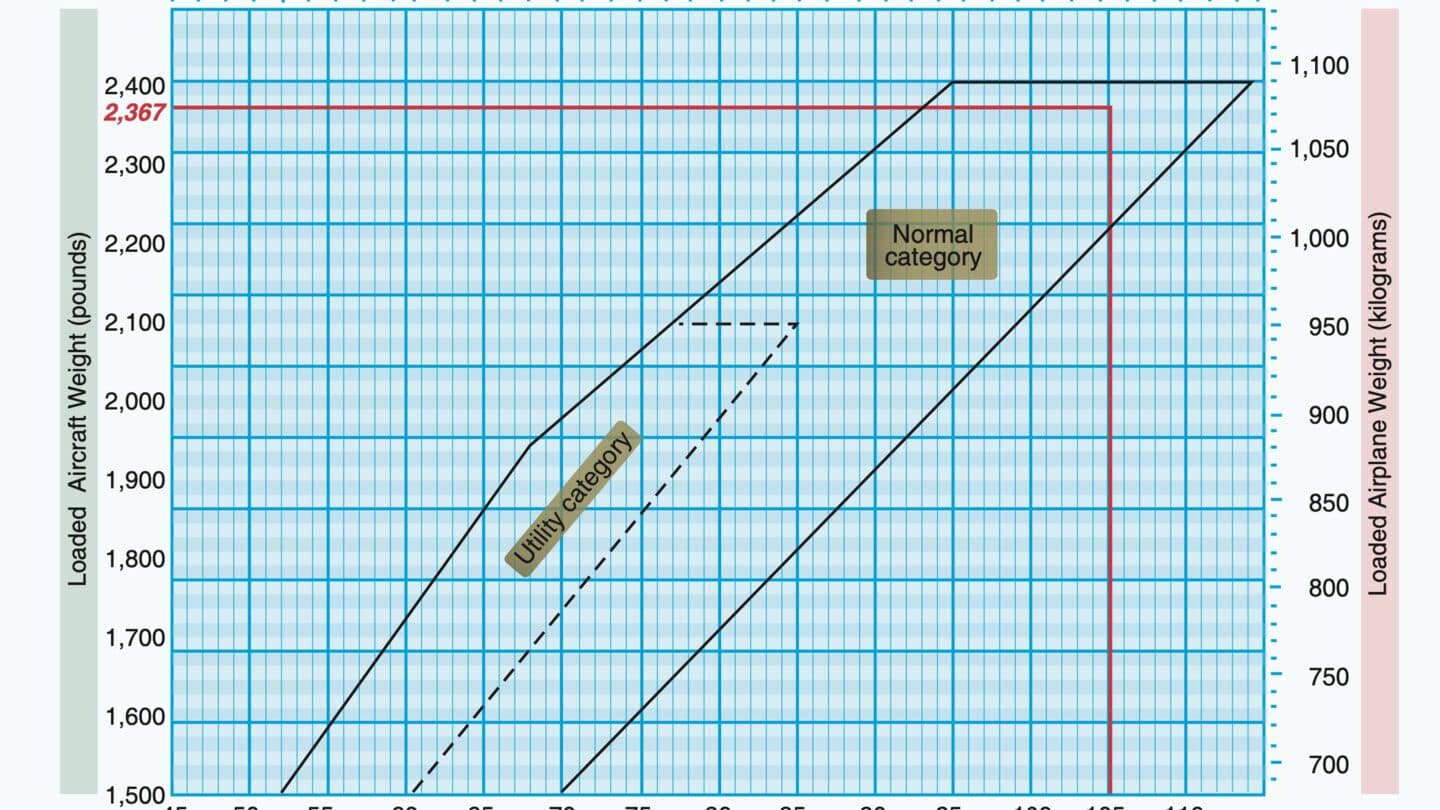
- The permitted ranges of weight and CG, usually as a chart or table the loaded aircraft must fall inside.
- Records and changes
- Where the individual aircraft's current weight and CG are recorded, and how modifications and repairs are added to them.
The Library
How It Relates to the Other Manuals
In the ATA chapter structure, chapter 08 is Leveling and Weighing, so the physical weighing procedure commonly appears in the aircraft maintenance manual, with the data to interpret the result kept in the weight and balance document. The limits are restated in the flight manual; our guide to the AFM and the quick reference handbook covers that side.
Repairs and modifications change the numbers. A repair that might appreciably affect weight or balance is one of the tests for a major repair in 14 CFR 1.1, and the structural repair manual is where such repairs are specified, so the weight change has to flow into the aircraft's records. The manual family overview shows how the pieces fit.
Upkeep
Who Maintains It, and Where Operators Come In
The manufacturer supplies the certificated data and revises it when the design changes. The operator builds its program on top. Under FAA AC 120-27F (6 May 2019), which applies to operators under part 91 subpart K and parts 121, 125, and 135, the operator's loading schedule documents compliance with the certificated limits and is typically more restrictive; it may not exceed them. The AC covers establishing aircraft weight, loading schedules, constructing a loading envelope, and onboard weight and balance systems, and it replaced AC 120-27E of 2005.
For content teams, the lesson is the same as elsewhere in the library: the numbers are only trustworthy if every reader is on the current revision, and a change to a limit must reach the flight manual, this document, and the operator's program together. Our guide to where aircraft manuals come from explains who originates the data.
FAQ
Questions We Hear
What is a weight and balance manual?
The document with the aircraft-specific data needed to determine its weight and center of gravity and to load it within limits: the weighing method, the loading data, and the limits. Manufacturers package this differently, and the certificated limits themselves also appear in the flight manual and the type certificate data sheet.
Is a weight and balance manual required?
Not as a document with that title. For transport category airplanes, 14 CFR 25.1583(c) requires the weight and center of gravity limitations in the Airplane Flight Manual. The loading information can then be in the AFM or in a separate weight and balance control and loading document that the AFM incorporates by reference. Many manufacturers use the separate document.
What is the difference between the weight and balance manual and the flight manual?
The flight manual states the limits the flight crew must respect. The weight and balance manual supplies the data to show a particular loading respects them, when the manufacturer has split the information that way. The two must agree, so a revision to one usually means a check of the other.
Who keeps the weight and balance records for an aircraft?
The operator and maintenance organization, from the manufacturer's data. FAA AC 120-27F recommends that incremental weight changes be recorded in a weight and balance change record, and the FAA Aircraft Weight and Balance Handbook explains how a mechanic determines empty weight and empty weight CG after changes.
Where can I read the FAA guidance?
AC 120-27F, Aircraft Weight and Balance Control (6 May 2019), covers weight and balance control programs for part 91 subpart K and parts 121, 125, and 135 operators. The Aircraft Weight and Balance Handbook, FAA-H-8083-1B (2016), explains the method for mechanics and flight crews. Where they differ from the manufacturer's data, the manufacturer's data takes precedence.

Get In Touch
Numbers Everyone Reads the Same Way
Weight and balance content has to match across the flight manual, the maintenance manual, and the operator's program. Tell us where yours stands.