
Explainer
What Is an IETM?

The Definition
Data, Not Pages
An IETM — Interactive Electronic Technical Manual — is maintenance and operating information delivered as an interactive screen presentation. The definition sounds like it describes the display, but the display is the least of it. What makes an IETM is the structured data underneath: content authored as discrete tasks and descriptions, tagged with the configurations it applies to, and linked to the parts, tools, and fault information it references. The viewer then shows a technician exactly the procedure for exactly the equipment in front of them — nothing to page through, nothing that applies to a different variant.
That is also the honest test for whether something deserves the name. A PDF behind a search box is an electronic manual; it is not an interactive one. If the content cannot be filtered by configuration, followed task-by-task, or revised as data rather than reissued as a document, it is a page collection wearing the acronym.
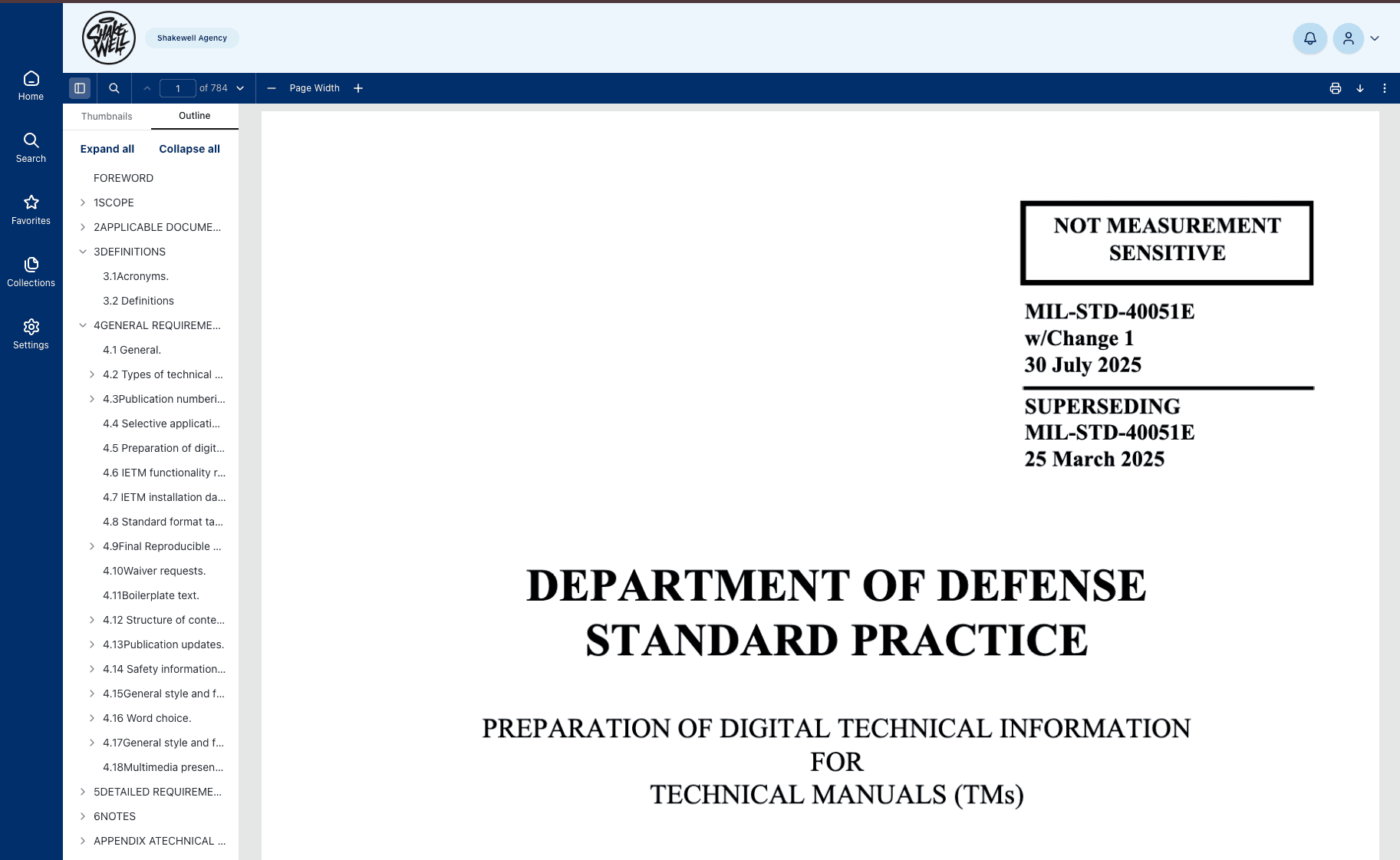
Two standards families govern the territory. In the U.S. defense world, MIL-STD-40051-1 defines IETM requirements for Army technical manuals. In the international world, S1000D produces the same category of deliverable under the name IETP — Interactive Electronic Technical Publication — shaped per service by business rules like MIL-STD-3031 and MIL-STD-3048. Same idea, different vocabularies — and a program can owe both on one contract.
In Practice
What Actually Matters
The legacy “class” scale — Class I page images up through Class V integrated diagnostics — still circulates, and contracts still cite it. Treat it as shorthand rather than specification: modern standards define required functionality directly, and the questions that decide whether an IETM earns its cost are concrete ones. Does content filter by the actual configuration, reliably enough that nobody double-checks against the full manual? Do procedures link to parts data and fault isolation, or does the technician carry those joins in their head? Do revisions reach the point of work as updated data, with a record of who received them? Does it work where the work happens — including offline?
One discipline saves more money than any feature: the IETM should be an output, not a product maintained by hand. Author once, in the governing standard, and publish page-based and interactive deliverables from that single source. Programs that build the IETM as a separate artifact pay for every change twice, forever — the most common and most expensive mistake in this territory. The viewer side of the question is its own decision; we wrote a field guide to choosing delivery platforms, and our own Content Portal plays in that market — judged, we'd insist, by the same criteria.
FAQ
Questions We Hear
What does IETM stand for?
Interactive Electronic Technical Manual: maintenance and operating information delivered as an interactive screen presentation — navigated, filtered, and linked — rather than as pages. The term comes from the U.S. defense world; S1000D uses the broader IETP, Interactive Electronic Technical Publication, for the same idea.
What is the difference between an IETM and a PDF manual?
A PDF is a page that happens to be on a screen — the maintainer still navigates by page number and reads around content that doesn't apply. An IETM is built from structured data: it presents the task at hand, filters steps by the configuration in front of the technician, links procedures to parts and diagnostics, and updates as data rather than as a reissued document. The distinction is the data model underneath, not the screen.
What are IETM classes?
A five-level scale from 1990s U.S. DoD work, still quoted in contracts and conversations: it runs from Class I — electronically indexed page images — through increasingly structured and interactive levels to Class V, integrated with diagnostics and expert systems. Modern standards have largely moved past the labels and specify required functionality directly, but the scale survives as shorthand for 'how interactive is this, really' — and it is worth pinning down which behaviors a contract actually means when it cites a class.
IETM or IETP — which is correct?
Both, in their own worlds. IETM is the U.S. military-standard term, used by MIL-STD-40051-1 and its kin; IETP is S1000D's term. They name the same category of deliverable, and a program bridging both worlds — an S1000D program under Army or Air Force business rules, say — will meet both on the same contract.

Get In Touch
Building an IETM?
Whether you owe an IETM on a contract or are deciding if one earns its cost, we can scope it against the standard your program actually cites.