
Explainer
What Is a Content Services Platform?
The Category
From Repositories to Services
For two decades the answer to enterprise content was a repository: put everything in the big system, and let people come to it. That era had a name — enterprise content management — and an ending: in 2017, Gartner retired its ECM Magic Quadrant and replaced it with one for content services platforms. The rename carried an argument. Content locked inside one system's interface serves exactly one consumer: a person, with a browser, who knows where to look. Everything else — the website, the mobile app, the partner's system, the integration, the AI assistant — needs content as services: addressable, structured, and governed at the source.
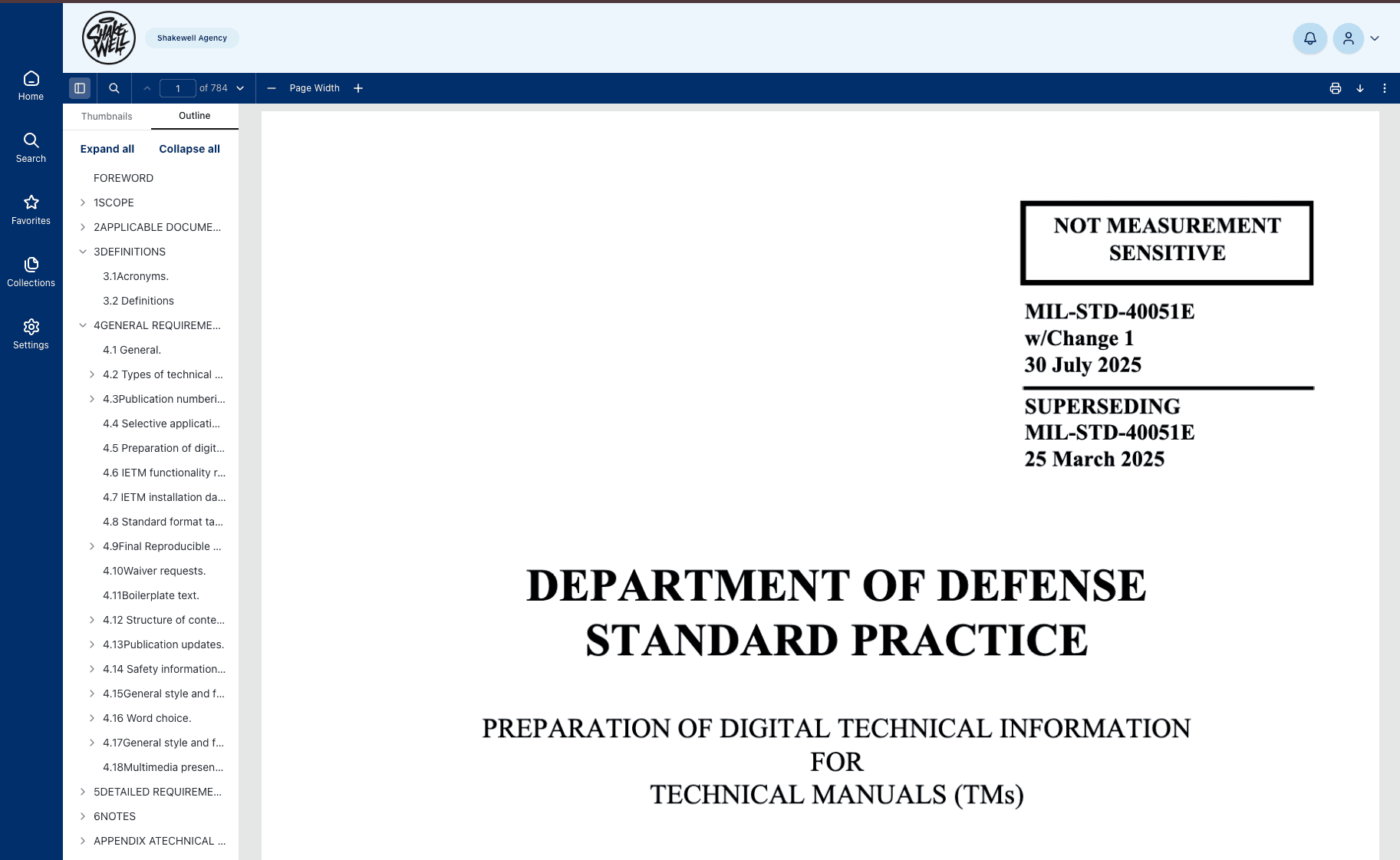
The distinction sounds abstract until you watch it fail. A PDF library can be full of correct, current, approved content and still be unable to answer a single programmatic question — which version is in force, what changed, who may see this, what does page 41 say. A services platform holds the same content in a shape where every one of those questions is an API call.
The Four Tests
Real CSP or Rebadged Repository?
Since the label is fashionable, vendors apply it liberally. Four tests separate the real article. Addressability: publications, versions, and individual pages have stable URLs and API endpoints — a link can point at a page, not just a file. Time: versions supersede rather than overwrite, so “current” and “what was current on March 3rd” are both answerable questions. Governance at the source: permissions enforced on every request, so search results, integrations, and AI retrieval layers all inherit the same access model instead of rebuilding it. Services parity: everything the interface can reach, an integration can reach.
This is the category our own Content Portal lives in: publications, versions, renditions, and pages all addressable through a documented, permission-scoped API, with supersession and audit built into the model — available as hosted SaaS or fully self-hosted, the same build in both. But the buying lesson is bigger than any one product: whatever platform you evaluate, run the four tests against it. The systems that fail them are the reason “we bought a portal” so often ends as another folder tree with a login page — and the systems that pass them are what make everything downstream, from accessibility to AI, an output format instead of a project.
FAQ
Questions We Hear
How is a content services platform different from a CMS?
A CMS manages a website: pages, menus, and the templates that render them, with content living inside that one destination. A content services platform inverts the relationship — content is the product, held once with its structure, versions, and permissions intact, and served outward through APIs to whatever needs it: the website, a mobile app, a partner integration, an AI retrieval layer. The practical test: if your content can only be reached through one interface, you have a management system; if any authorized system can request it as data, you have a services platform.
Where does the term come from?
From the analyst world: Gartner retired its long-running Magic Quadrant for Enterprise Content Management in 2017 and replaced it with one for content services platforms. The rename was an argument — that the ECM era's central repository ('put everything in the big system') had failed, and that the future was content reachable as services wherever work happens. The category has since become the standard label for platforms that hold governed content behind an API.
What should a real CSP actually provide?
Four things distinguish the real article from a rebadged document store. Addressability: publications, versions, and individual pages reachable by stable URL and API, not just whole-file download. Time: version history with explicit supersession, so 'current' and 'what was current in March' are both answerable. Governance: permissions enforced at the source on every request, so each consuming system inherits them instead of reimplementing them. And services parity: everything the interface can do, an integration can do. A system that only ticks 'stores files' and 'has a search box' is a repository with a fresh label.
Is a CSP relevant if we mostly publish PDFs?
Especially then. A CSP doesn't require abandoning PDF — it changes what a PDF is: instead of a file emailed around and copied into folders, it becomes one rendition of a governed publication, served from a canonical location with its versions, permissions, and page-level structure intact. Legacy PDFs can be ingested and served the same way, which is usually the fastest first step for an estate of thousands of files.

See It in Action
Run the Four Tests on Ours
The Shakewell Content Portal is our content services platform — hosted SaaS or self-hosted, the same build in both. Bring your content and we'll show you what it looks like served as a service.
or email hello@shakewell.agency