
Explainer
How an AI Answers From Your Documents

The Gap
Retrieval Is Only as Good as What It Retrieves
The demo is always convincing: ask a question, watch the model quote your own report back at you. The failures come later, on the questions that matter — it cites the 2023 version of a policy that changed in 2025, treats a term of art as ordinary English because it never saw the definitions section, or blends two documents that happen to share phrasing. None of these are model failures. They are content failures: the library never told the machine what version was current, what the words meant, or which documents belong together.
A PDF library can't tell it, because a rendered page states nothing about itself. The fix isn't a smarter model — it's a source that carries its own context.
The Foundation
Identity, Time, and Relationships
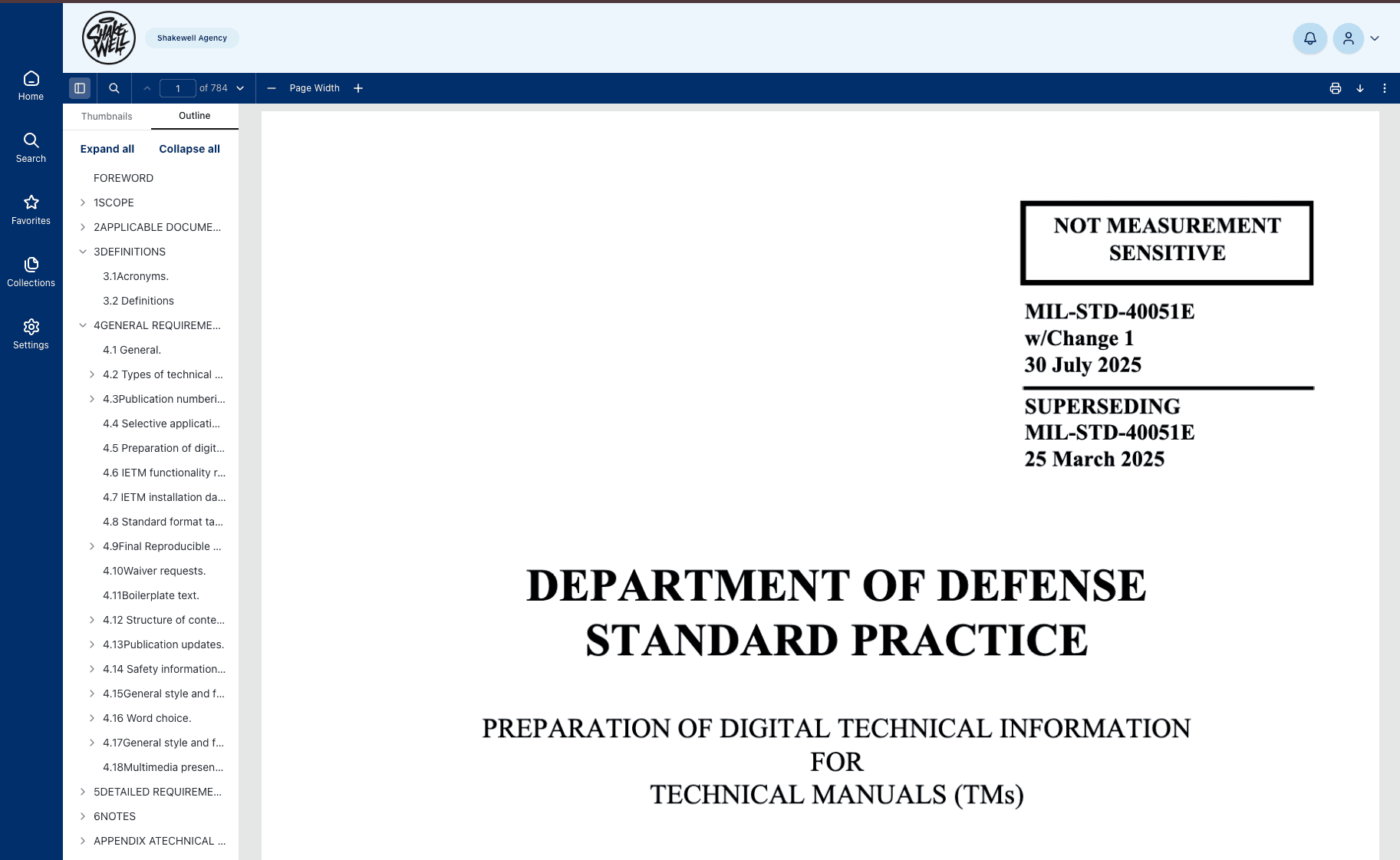
Grounding-ready content has three properties. Identity: every clause, table, and definition is addressable on its own, so retrieval returns the provision, not the 400-page file containing it. Time: versions carry effective dates, so “what applies” and “what applied last March” are different, answerable questions. Relationships: defined terms link to their uses, documents to the collections they travel with — and when the same clause appears across documents, the system knows it is the same clause, one piece of knowledge with many appearances, rather than a coincidence for the model to misread.
Serve all of that through APIs and the AI layer becomes almost boring: models ground on content that already knows what it is. This is the same investment that pays every other machine reader — search, integrations, assistive technology — which is why the sequence matters so much. Structure the content, put a delivery platform with real APIs in front of it, and add the model last. Buy the model first and you've bought a very articulate reader for a library that can't explain itself.
FAQ
Questions We Hear
Why can't we just point an AI at our PDF library?
You can, and it will answer — confidently, from whatever text extraction guessed at. A PDF states none of its structure: the model can't tell a superseded version from the current one, a defined term from an ordinary word, or a footnote from a requirement. Grounding quality is capped by source quality, and a library of rendered pages is the lowest-quality source that still looks like knowledge.
What structure does grounded retrieval actually need?
Three things above all. Identity: each clause, section, and definition addressable on its own, not trapped in page 341 of a file. Time: versions with effective dates, so the system retrieves what was — or is — in force, not just what matched. Relationships: definitions linked to their uses, documents linked to the documents they travel with, and repeated clauses known to be the same clause. That web of context is what lets a model answer with the right passage instead of a plausible one.
What does it mean that the system 'knows a clause repeats'?
In structured libraries, identical or near-identical provisions across documents are linked as one piece of knowledge with many appearances. When a reader or a model touches one instance, the system can surface the others — same wording, other contexts — instead of treating them as coincidental strangers. PDFs cannot do this, because each file knows nothing outside its own margins; a content platform can, because it holds the whole corpus with relationships intact.
Should we buy the AI layer first and fix the content later?
That order fails predictably: the pilot demos well on easy questions, then hallucinates on the ones that matter, and the project stalls with the content problem still unsolved. The unglamorous sequence wins — structure the content, expose it through APIs, then let models ground on it. Step one is never the model; the model is the last, easiest step.
Get In Touch
Starting at the Right End?
Our AI practice and our content engineering practice are the same practice — because grounded AI is a structured content problem wearing a fashionable coat. Tell us what your library looks like.