
Field Guide
Technical Publications for Small Fleets

The Estate
Three Layers, Three Owners
A small fleet's publications break into three layers. The OEM layer: the licensed manual family per type, revised on the manufacturer's schedule — data you subscribe to but never own (here's why). The derived layer: the customized MEL descended from the master MEL, configuration-specific checklists — documents that start from OEM or regulator sources and become yours through tailoring. And the owned layer: operations manuals, company procedures, training content — publications no one will ever write for you.
Airlines assign a department to each layer. In business aviation the whole stack lands on the director of maintenance and the chief pilot, in the margins of their actual jobs — which is why the failure pattern is so uniform: revisions downloaded but unevenly distributed, a MEL living its life in Word, three versions of the ops manual on a shared drive, and no answer to “who had which revision when” if an investigation ever asks.
The Fix
Solve Delivery First, Authoring Second
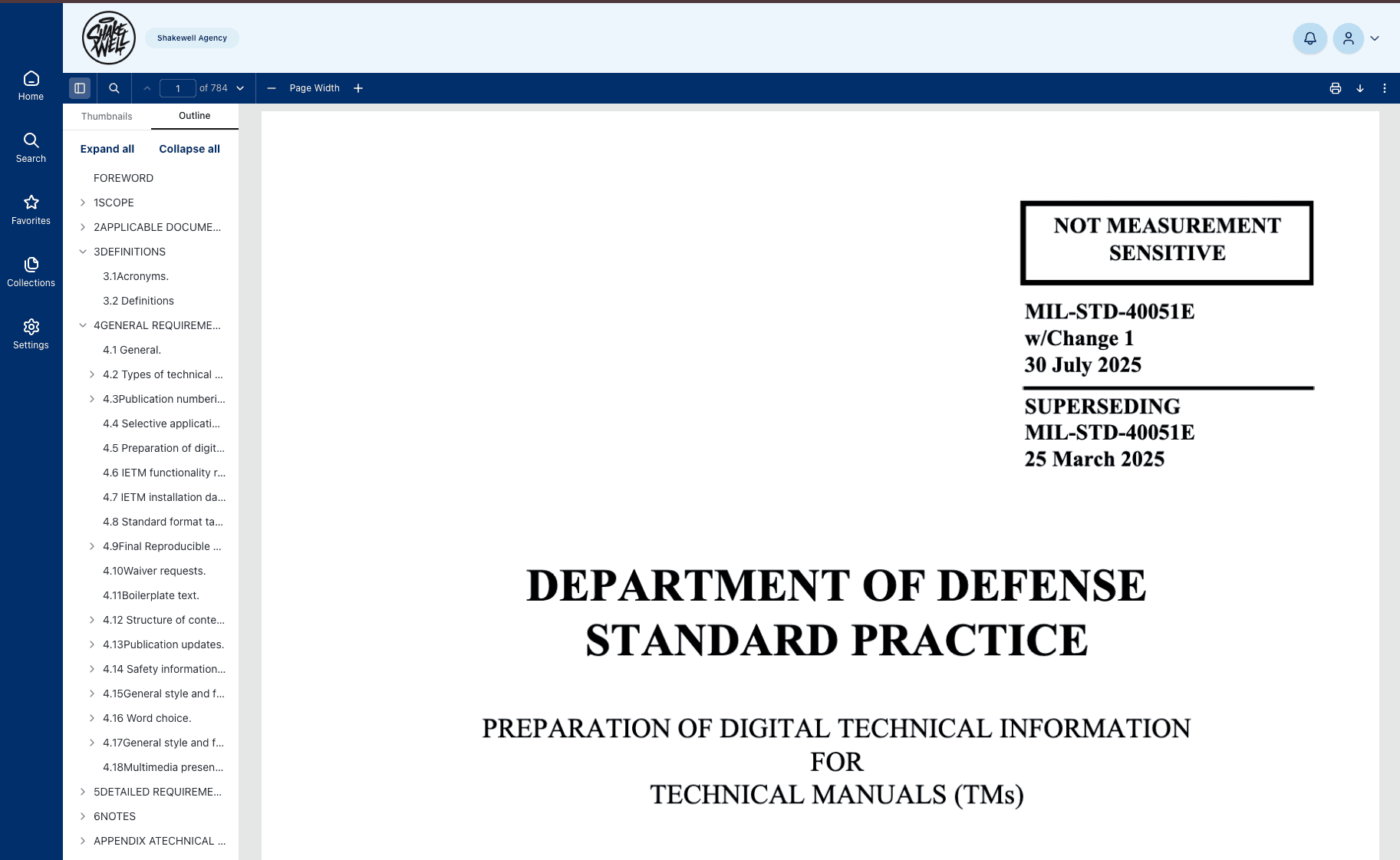
The right-sized answer starts with delivery, because it's the cheapest fix with the biggest payoff: one platform holding all three layers, with version supersession so a superseded revision can't be the one on the tablet, permission scoping, EFB-friendly access for the flight-deck library, and event capture so currency and distribution are provable rather than asserted. That's our Content Portal doing for a six-aircraft operation exactly what it does for programs a hundred times larger — the platform doesn't care how many tails you run.
The authoring layer follows on its own schedule: the MEL and ops manuals graduate from Word to structured authoring when their revision pain justifies it, gaining the change tracking and version discipline an auditor loves. And all of it can run as a service — the OEM licenses stay in your name; the operation around them is outsourceable to people who do this all day. You get the publications department's output without its headcount, which is, frankly, the whole point of being a small fleet.
FAQ
Questions We Hear
What does a small operator's publications estate actually contain?
Three layers with different owners. OEM data: the licensed manual family per type, arriving as subscriptions with revisions on the manufacturer's schedule. Derived-but-yours: the customized MEL descended from the master MEL, checklists tailored to your configuration and ops specs. And wholly yours: operations manuals, company procedures, training material, and the paperwork trail your regulator audits. Airlines run departments for this. A six-aircraft operation runs it off someone's desk — usually the director of maintenance's, in the margins.
What goes wrong without a system?
The same failures at every small operator we meet: OEM revisions downloaded but not consistently distributed, so a pilot's tablet carries last quarter's PDF; a customized MEL maintained in Word with the change history in someone's memory; company procedures that exist in three versions across a shared drive; and no way to answer 'who had which revision when' if an incident ever asks. None of it is negligence — it's airline-shaped obligations landing on a team with no airline-shaped staffing.
What does a right-sized solution look like?
Not an airline suite, and not folders-plus-discipline either. The workable middle: one delivery platform holding all three layers — licensed OEM library, derived documents, and your own manuals — with version supersession, permission scoping, EFB-friendly access, and event capture, so currency and distribution are properties of the system rather than chores. Your own documents graduate from Word to structured authoring on their own schedule; the delivery problem gets solved first because it's the cheapest fix with the biggest audit payoff.
Can this be outsourced entirely?
Mostly. The OEM relationship stays yours — licenses attach to the operator. Everything else can be run as a service: platform hosting, revision-currency monitoring against OEM updates, distribution to crews and maintenance, and authoring support for the MEL and company manuals. That's precisely the shape of engagement we run for operators who have the obligations of a publications department and no intention of hiring one.

Get In Touch
A Publications Department, Without One
Tell us your fleet and what's currently living in Word, on tablets, and in someone's memory. We'll show you the right-sized version — platform, currency, and authoring support, run as a service.